
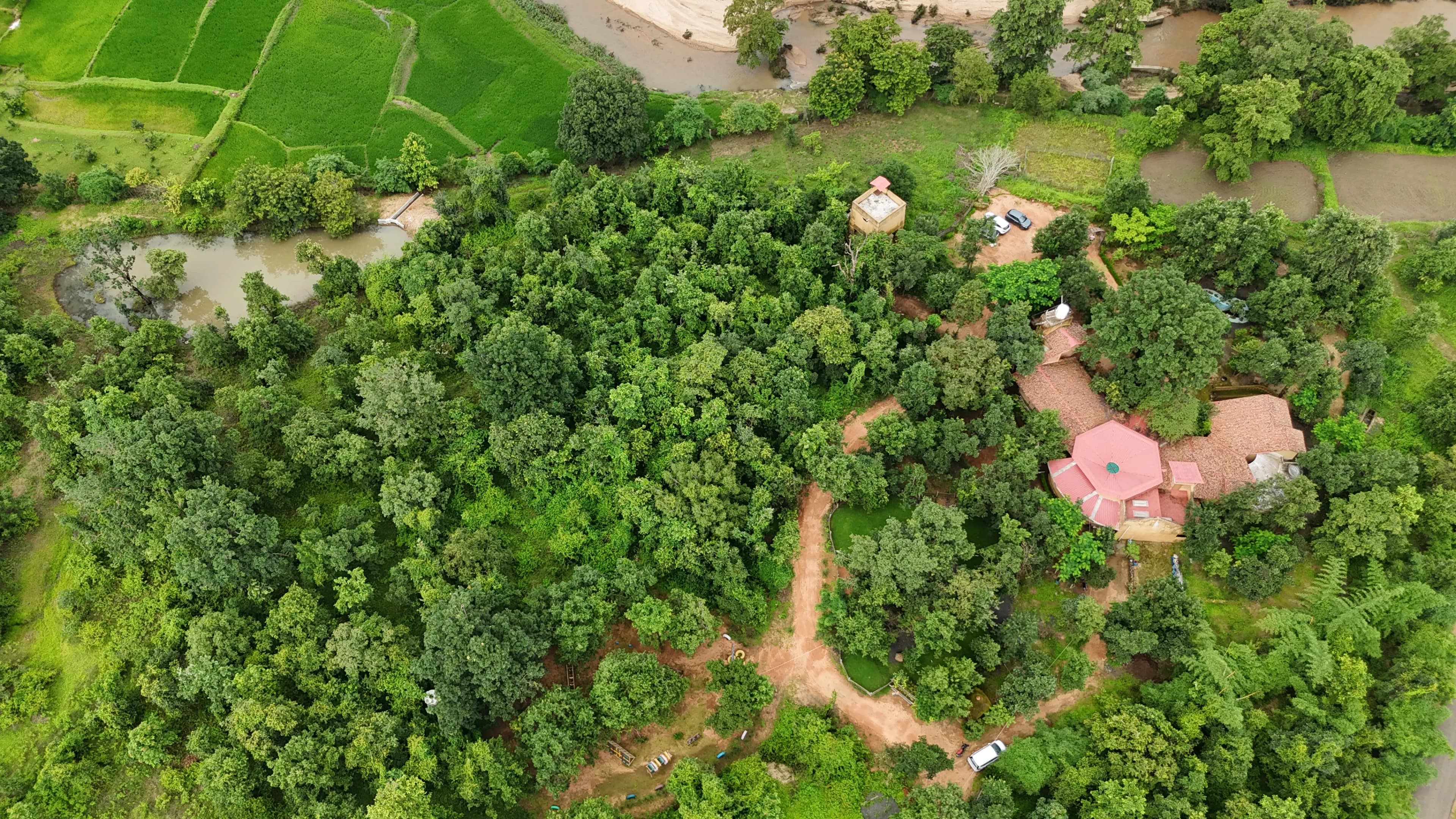
Kanha Tiger Reserve is one of the great wildlife landscapes of Asia: rolling sal forest, bamboo-covered hills and wide, deer-filled meadows in the Maikal range of Madhya Pradesh, almost exactly in the centre of India. It was among the first nine tiger reserves created under Project Tiger in 1973, and it is the only place in the world where the hard-ground barasingha survives in the wild in good numbers.
This guide explains how the park works, which safari zones to choose, when to go and how to get there. It is written by the team at Surwahi Social Ecoestate, an award-winning eco stay about 20 km from Kanha's Khatia gate, so where it helps we explain how a stay with us fits around the park.
Kanha at a glance
Core and buffer zones explained
Kanha's safari area is divided into core zones, the protected heart of the reserve, and buffer zones, the forest belt around it where people and wildlife share the landscape.
The four core zones each have a strictly limited number of vehicle permits per session:
The buffer zones - Khatia, Khapa, Sijhora and Phen - are easier to book at short notice and are often excellent for leopard, sloth bear, gaur, wild dog and birds. Tigers are seen in the buffer too. If core permits are sold out for your dates, a buffer safari is far from a consolation prize.
One rule catches many first-time visitors: your permit is for a zone, and each zone is entered through a specific gate. A Mukki-zone permit cannot be used at Khatia. Choose your stay and your zones together - our safari booking guide sets out which gate serves which zone.
What you can see in Kanha
Kanha is best known for the Bengal tiger, and sightings here are some of the most reliable in central India, though never guaranteed. A good safari is about the whole forest, and Kanha rewards patience:
Read more in our wildlife safari experience and bird-watching pages.
When to visit Kanha
See our month-by-month best time to visit Kanha page for more detail.
How to get to Kanha
There is no airport at the park. Most travellers fly to Jabalpur or Nagpur and drive the final stretch; some arrive via Raipur. International visitors usually connect through Delhi or Mumbai. Our getting here guide covers each route, and our guide for international travellers covers visas, permits for foreign nationals and arrival logistics.
We arrange pickups from Jabalpur airport and railway station for our guests - ask us for a quote when you book.
Where to stay near Kanha
Accommodation is clustered around the gates. Most lodges sit in the busy resort strip near Khatia or around Mukki. Surwahi takes a different approach: a ten-acre regenerated forest estate in Surwahi village, about 20 km from Khatia gate, outside the resort belt. You get quiet nights, a working farm, local Gond and Baiga culture and a forest that has grown from under 300 trees to more than 6,000 since 2015. The trade-off is a slightly longer drive to the gate before a morning safari.
Compare the options honestly in our guide to where to stay in Kanha, or go straight to our stay and safari packages.
Responsible safari etiquette
- Wear muted, earthy colours and keep voices low.
- Never ask your driver to chase, crowd or block an animal. Follow your guide and the park rules.
- No feeding, no littering, no drones, and no flash on nocturnal animals.
- Carry your original ID (passport for foreign nationals) - it must match your permit.
- Remember that a good safari is not only about tigers. The jungle rewards the curious.