Most people come to Kanha for the tiger. Many leave talking just as much about the people: a Gond painter turning a story into a tree full of birds, a lunch of millet and forest greens cooked over wood, a village woman explaining which leaf soothes a scorpion sting. The forests of Kanha have never been empty wilderness. They are a landscape shaped over centuries by the communities who live in and around them.
This guide is an introduction to two of those communities, the Gond and the Baiga, and to how visitors can engage with their culture in a way that is respectful, fair and genuinely rewarding.
A note before we begin
The Gond and Baiga are living communities, not exhibits. They are farmers, forest workers, artists, teachers, shopkeepers and students, living modern lives in a rapidly changing India while holding on to languages, beliefs and knowledge that are centuries old. Any short article simplifies. Whenever you can, let people tell you about themselves in their own words.
The Gond
The Gond are one of the largest Adivasi (indigenous) communities in India, spread across central India including large parts of Madhya Pradesh. The Gond kingdoms once ruled much of this region. The fort and palace at Ramnagar, near Mandla, are reminders of that history.
Gond art
To many people outside India, "Gond" means a style of painting: bright, intricate images of trees, animals and gods built from dots, dashes and fine lines. Traditionally, Gond communities decorated the walls and floors of their homes with designs and stories, especially for festivals. In the twentieth century, artists from the Pardhan Gond community, a group traditionally linked to Gond music and oral storytelling, began painting on paper and canvas. The best known of them, Jangarh Singh Shyam from Patangarh village in Dindori district, brought Gond painting to national and international galleries, and a whole generation of artists followed.
Look closely at a Gond painting and you will see that every pattern means something: a texture for a tree's bark, a rhythm for flowing water, a story about how the world came to be. At Surwahi, the walls of our Jholar suite corridor carry Gond paintings, and Sanjay Pancheshwar, a Gond artist from the area, teaches our Gond art workshops. He does not perform for guests. He teaches them, and the difference is obvious within ten minutes of picking up a brush.
The Baiga
The Baiga live mainly in the Mandla, Dindori and Balaghat districts of Madhya Pradesh, which includes the Kanha landscape, and in neighbouring Chhattisgarh. The Government of India classifies them as a Particularly Vulnerable Tribal Group (PVTG), a category for communities considered especially at risk.
Keepers of the forest
The Baiga are famous for their deep knowledge of the forest. Traditionally they practised a form of shifting cultivation known as bewar, and they are widely respected as healers and herbalists, with a detailed understanding of the medicinal plants of the sal forest. Much of this knowledge is passed down orally and is at real risk of being lost.
Godna: the art of tattooing
Baiga women have a long tradition of godna, intricate tattoos applied over a lifetime that carry cultural and spiritual meaning. Tattoo patterns have in turn inspired a contemporary art form on paper and fabric. As with any personal tradition, it is something to learn about, not something to photograph without asking.
Forest, farm and food
The cuisine of the Kanha region reflects the land. If you eat with us, you will meet some of these ingredients:
Food here is cooked slowly, often over wood fires, and shared. Join a live tribal cooking experience and you will understand why.
Life on the edge of the park
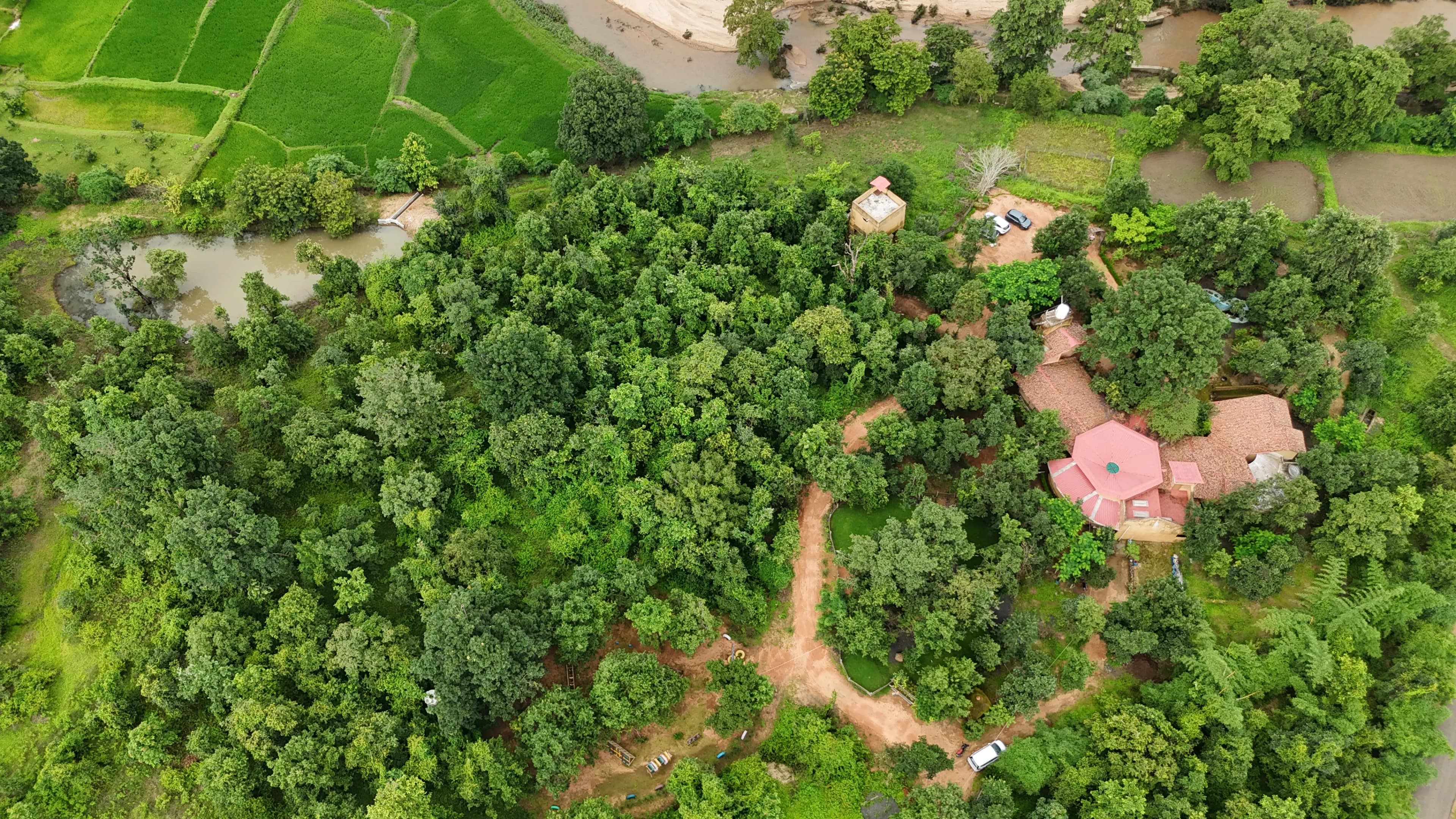
The relationship between the communities around Kanha and the tiger reserve is complex. As the reserve was protected, villages inside the core were relocated to land outside it. Our family suites, Jholar and Kariwah, are named after two villages that were moved out of the park in the 1970s. Today, people in the buffer zone live alongside leopards and tigers, lose crops and livestock to wildlife, and depend on forest access that is carefully regulated. They also work as guides, drivers, cooks, naturalists and conservation staff, and they are essential to the park's future.
Tourism can either widen or narrow the gap between the park and its neighbours. Done well, it brings income, respect and pride in local culture. Done badly, it turns people into scenery. That is why we hire locally, and why our team includes people like Narendra Patle, our estate manager of ten years, and Pradeep Uikey, whose cooking carries the flavours of his community. It is also why, in 2017, we helped more than 40 village women organise the Deetya Jagriti Self-Help Group.
How to visit villages respectfully
If you would like to experience village life around Kanha, a few simple principles make all the difference:
1. Go with someone local. A host who belongs to the community can introduce you properly, translate and make sure your visit is welcome. 2. Ask before you photograph people, homes, shrines and ceremonies, and accept a "no" gracefully. Never photograph children without a parent's permission. 3. Dress modestly. Shoulders and knees covered is a good rule, especially when visiting homes. 4. Do not give money, sweets or pens to children. It encourages begging and undermines parents. If you want to help, support a community organisation or buy directly from artisans. 5. Buy direct and pay fairly. Buying a painting or craft directly from the person who made it is one of the best ways to support local culture. Bargaining hard over small sums helps no one. 6. Listen more than you talk. Ask about farming, festivals, food and forests. Most people are proud to share, and you will learn far more than any guidebook can teach. 7. Remember that you are a guest. Village schedules revolve around fields, cattle and family, not tourists.
Frequently asked questions
Who are the Baiga?
The Baiga are an Adivasi community living mainly in the Mandla, Dindori and Balaghat districts of Madhya Pradesh and in neighbouring Chhattisgarh. The Government of India classifies them as a Particularly Vulnerable Tribal Group. They are known for their deep knowledge of forest plants and healing.
What is Gond art?
A style of painting built from dots, dashes and fine lines that shows trees, animals and stories. It grew out of wall and floor decoration in Gond homes, and Pardhan Gond artists such as Jangarh Singh Shyam took it onto paper and canvas.
Can tourists visit tribal villages near Kanha?
Yes, ideally with a host from the community. Ask before taking photos, dress modestly, buy crafts directly from the people who make them, and do not hand out money or sweets to children.
What are kodo and kutki?
Hardy millets that grow on poor soil with little water and have fed central India for generations. They are a staple of local cooking around Kanha, and our kitchen at Surwahi is named after them.
Where can I learn Gond painting near Kanha?
At Surwahi, Gond artist Sanjay Pancheshwar teaches Gond art workshops for guests.
Experiences at Surwahi
Our approach to cultural experiences is simple: the people who live here lead them. Options include:
- Cultural immersion and village walks
- Gond art workshops with a practising Gond artist
- Earthen pottery and bamboo and lantana crafting
- Live tribal cooking and farm life visits
- Grassroots governance, on how village self-government actually works
They fit easily between safaris, and an unhurried afternoon in the village is a good counterweight to early-morning drives.
Plan your visit with our sample Kanha itineraries, or read our story to learn how Surwahi grew alongside its village. If the forest's stories drew you here, read is Kanha the real Jungle Book?