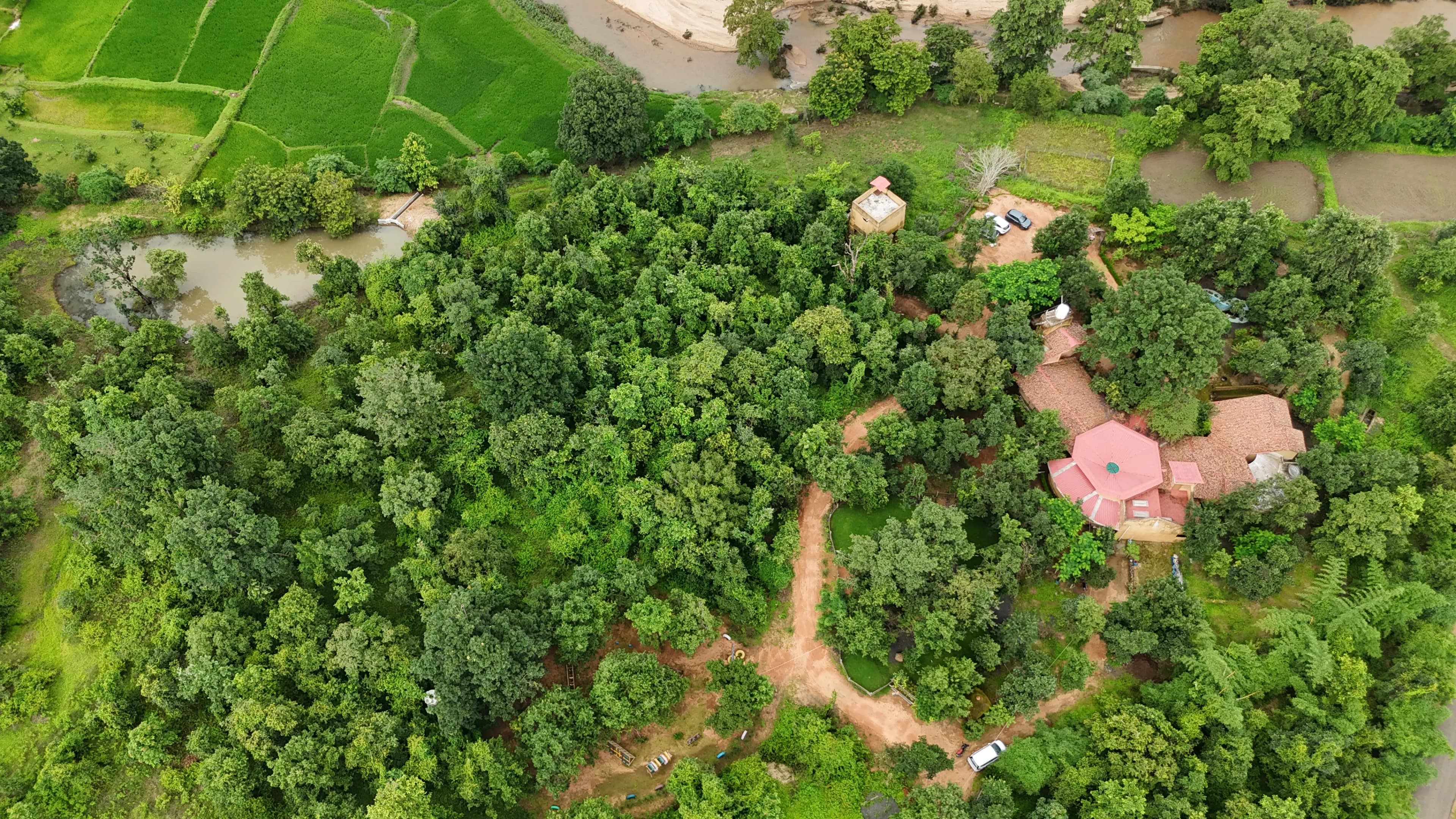
"It was seven o'clock of a very warm evening in the Seeonee hills..." So begins the first of Rudyard Kipling's Jungle Book stories, published in 1894. More than a century later, the stories of Mowgli, Baloo, Bagheera and Shere Khan are known all over the world. Many travellers who come to central India arrive with one question: is this the real Jungle Book?
The honest answer is more interesting than a simple yes or no.
Kipling never went there
Rudyard Kipling was born in Bombay (now Mumbai) in 1865 and spent his early childhood and his early working years in India. But he never visited the Seoni hills where he set Mowgli's jungle, and he wrote the Jungle Book stories while living in Vermont, in the United States.
According to the Kipling Society, his official biographer, Charles Carrington, confirmed that Kipling had no first-hand knowledge of Seoni, and Kipling is reported to have told one correspondent that he never went there. He built his setting from other people's accounts. The most important was Robert Armitage Sterndale, a British administrator and naturalist who served in the Central Provinces and published Seonee, or Camp Life on the Satpura Range in 1877. Sterndale's descriptions of the Seoni district, the Wainganga river, the wildlife and the villages gave Kipling the raw material, and possibly even his spelling, "Seeonee".
Kipling also drew on friends who had travelled in the region, on natural history books and photographs, and on the stories of India he had grown up with. His jungle is part real landscape and part imagination.
So where is "Mowgli land"?
The real town of Seoni lies in southern Madhya Pradesh, and Pench Tiger Reserve is the protected forest closest to it. That is why Pench is often marketed as the "Jungle Book" park, and the Wainganga river that Kipling mentions does flow through the region.
Kanha is also widely associated with the stories, and many travel writers and guides describe it as the landscape that inspired them. There is a good reason the association sticks. In Kipling's time, Kanha, Pench and the forests in between were part of a far more continuous stretch of sal and teak forest across the Satpura and Maikal ranges. Kipling was not describing a single modern national park. He was describing the great central Indian forest, of which Kanha is today one of the largest and best-protected surviving pieces.
So the fairest answer is this: Kipling's Jungle Book is set in the Seoni hills, but its jungle is the central Indian forest, and Kanha is one of the finest places to experience what that forest still looks like.
The forest of the stories, in real life
Read the stories again before your trip and you will start to recognise things.
The human side of the story
The Jungle Book is also a story about the edge between village and forest, and about a child who belongs to both. That edge is still the reality of life around Kanha.
The buffer zone around the reserve is home to many villages, including Gond and Baiga communities whose lives have been bound up with the forest for generations. Some villages were relocated out of the core of the reserve as it was protected. Our own family suites, Jholar and Kariwah, are named after two of them. People still farm, gather forest produce, herd cattle and live alongside leopards and tigers, with all the difficulty that involves.
If the Jungle Book is part of why you come, take time to see that side too: a village walk, a meal of local millets cooked the traditional way at a tribal cooking session, or an afternoon with a Gond artist. It brings the stories down to earth in the best possible way.
Not just for fans: a Jungle Book trip with children
For families, the Jungle Book is an easy way into Kanha. Before the trip, read a few of the original stories aloud. On safari, give each child a "character" to look for: a langur for the Bandar-log, a dhole for the red dogs, a sloth bear for Baloo, a tiger for Shere Khan. Every sighting becomes a small triumph, and even a quiet drive turns into a story.
Back at Surwahi, children can follow animal tracks along the estate paths, listen for the birds settling at dusk, and learn which plants the forest's animals depend on. It is a gentle way to swap a cartoon jungle for a real one, and to understand why that real one needs protecting.
Kipling with care
The Jungle Book is a product of its time, and it reflects the colonial attitudes of the British Empire in which Kipling grew up. Many readers today love the animal stories while thinking critically about how the book portrays India and Indians. Both reactions can sit together on a safari jeep.
A Jungle Book trip to Kanha
If you want to follow the Kipling trail, here is a suggestion:
Frequently asked questions
Is Kanha National Park the setting of The Jungle Book?
Not exactly. Kipling set the stories in the Seoni hills of central India, closest to today's Pench Tiger Reserve. Kanha is part of the same great central Indian forest, and it is one of the best places to see the kind of jungle and wildlife Kipling described.
Did Rudyard Kipling ever visit Kanha or Seoni?
No. Kipling lived and worked in India but never visited Seoni, and he wrote the Jungle Book stories in Vermont. He drew on Robert Armitage Sterndale's 1877 book about the Seoni district and on friends' accounts.
Should I visit Kanha or Pench for the Jungle Book connection?
Pench is closest to Seoni, the town named in the stories. Kanha is famous for its meadows, barasingha and tigers. If the Kipling link matters to you, combine both parks on one trip.
Which Jungle Book animals can you see in Kanha?
Tigers (Shere Khan), leopards (Bagheera was a black leopard), sloth bears (the real bear of central India), langurs (the Bandar-log) and dhole (the red dogs). Wolves and pythons live in the region but are rarely seen.
The real magic
Kipling never saw the forest he wrote about, yet he captured something true about it: a living world with its own laws, where animals and people share the same paths and the same seasons. That world still exists in central India, and Kanha is one of the best places to step into it.
Start planning with our Kanha National Park guide, see our sample itineraries, or let us put together a stay and safari package for you.