Ask most people why they come to Kanha and the answer is tigers. Ask the people who know Kanha well, and many will add a second animal: a large, graceful deer with a crown of many-tined antlers, grazing knee-deep in the meadows at dawn. This is the barasingha, and its survival is one of the great conservation stories of Asia.
What is a barasingha?
Barasingha means "twelve-tined" in Hindi, a nod to the stag's impressive antlers, which often carry ten to fourteen points. It is the common name for the swamp deer, a species that once ranged across the grasslands and river plains of northern and central India and into Nepal.
There are three recognised populations of swamp deer, and Kanha's is distinct. It is the hard-ground barasingha (Rucervus duvaucelii branderi). Its relatives elsewhere live in wet, marshy grasslands. The hard-ground subspecies is adapted to firmer ground: open sal forest with a grassy understorey and the large meadows that make Kanha so photogenic. It has harder hooves suited to that terrain, and it is the state animal of Madhya Pradesh.
From thousands to 66
The barasingha was once common across central India. As forests were cleared for farming, as hunting went unchecked and as grazing livestock spread disease and competed for grass, numbers collapsed.
Figures cited by the Kanha Tiger Reserve management, and reported widely in the Indian press, tell the story starkly. A census in 1938 counted roughly 3,000 barasingha in Kanha. By 1953 the estimate had fallen to 551. By around 1970, just 66 animals remained in Kanha. Sources give slightly different dates for the low point, between the late 1960s and 1970, but they agree on the number. For a while, the hard-ground barasingha was one bad season away from extinction.
How Kanha brought it back
What happened next is a textbook example of patient, science-led habitat management. Over the following decades, the reserve:
The result is remarkable. Reports from the reserve put the population at around 800 a few years ago, and more recent reports cite roughly 1,100 animals. Barasingha now graze freely across Kanha's meadows, and visitors in the right zones often see them in good numbers.
Spreading the risk
A species that survives in only one place remains vulnerable. A single disease outbreak, fire or drought could undo decades of work. So in recent years the Madhya Pradesh Forest Department has begun translocating barasingha from Kanha to establish new populations elsewhere.
Groups have been moved to Satpura Tiger Reserve, to Van Vihar National Park in Bhopal and, since 2023, to Bandhavgarh Tiger Reserve, where reports in 2026 put the new population in the sixties. Translocations from Kanha continued into 2026. Each new population is a small insurance policy for the subspecies, and every one of them started in Kanha.
Where and when to see barasingha in Kanha
Barasingha are most closely associated with the Kanha zone and its famous meadows, reached through Khatia gate, which is the closest gate to Surwahi. Our guide to Kanha's safari zones explains which permits to book. They also occur in other parts of the reserve, and your guide will know where herds have been seen recently.
A few tips:
Barasingha, chital or sambar?
Kanha has several deer species, and first-time visitors often mix them up:
Barasingha and the tiger
It is no coincidence that one of India's best tiger reserves is also where the barasingha recovered. The two are linked. Healthy meadows support large herds of deer, and large herds of deer support predators. Tigers, leopards and dhole all hunt barasingha, especially young animals, and a herd's behaviour on the meadow is shaped by that constant risk. Watch for animals raising their heads together, stamping, or giving sharp alarm calls. Chital and langurs often raise the alarm too, and a chorus of alarm calls around a meadow is one of the surest signs that a predator is moving nearby.
For visitors, that link is useful. Spending time quietly near a meadow with a herd of barasingha is not just a chance to see a rare deer. It is often one of the best ways to be in the right place when a tiger appears.
Photographing barasingha
Responsible viewing
The barasingha recovery depended on undisturbed grasslands, so please help keep them that way:
- Stay in your vehicle and on the track at all times.
- Keep voices low, and never ask your driver to move closer to a herd or to block its path.
- Do not use flash, call out, or play recorded sounds to get a reaction.
- Support the people who protect the park. Hire local guides, stay with locally run businesses and buy local crafts.
Frequently asked questions
Where can I see barasingha in Kanha?
Mostly on the open meadows of Kanha zone, the central core zone reached through Khatia gate. Herds also use other parts of the reserve, and guides follow where they have been seen recently. Morning safaris are usually best.
Why is Kanha's barasingha called the hard-ground swamp deer?
Other swamp deer populations live in wet, marshy grasslands in northern India and Nepal. Kanha's subspecies, Rucervus duvaucelii branderi, is adapted to firmer ground, with harder hooves suited to open sal forest and grassy meadows.
How many barasingha are there in Kanha today?
Recent reports quoting reserve officials put the population at roughly 1,100, up from about 66 animals at the low point in the late 1960s. Counts vary between surveys, so treat any single figure as approximate.
Is the barasingha the state animal of Madhya Pradesh?
Yes. The hard-ground barasingha is the state animal of Madhya Pradesh, and Kanha is where it survived.
Can you see barasingha outside Kanha?
Small populations have been started by moving animals from Kanha to Satpura Tiger Reserve, Van Vihar National Park in Bhopal and Bandhavgarh Tiger Reserve. Kanha is still by far the best place to see them.
Why it matters
The tiger gets the headlines, but tigers need prey, and prey needs healthy grassland. The barasingha story shows what protected areas can do when they are managed patiently and well. It also shows that conservation in India is never only about animals: it involves foresters, scientists, villagers who moved, and communities who still live on the edges of the park.
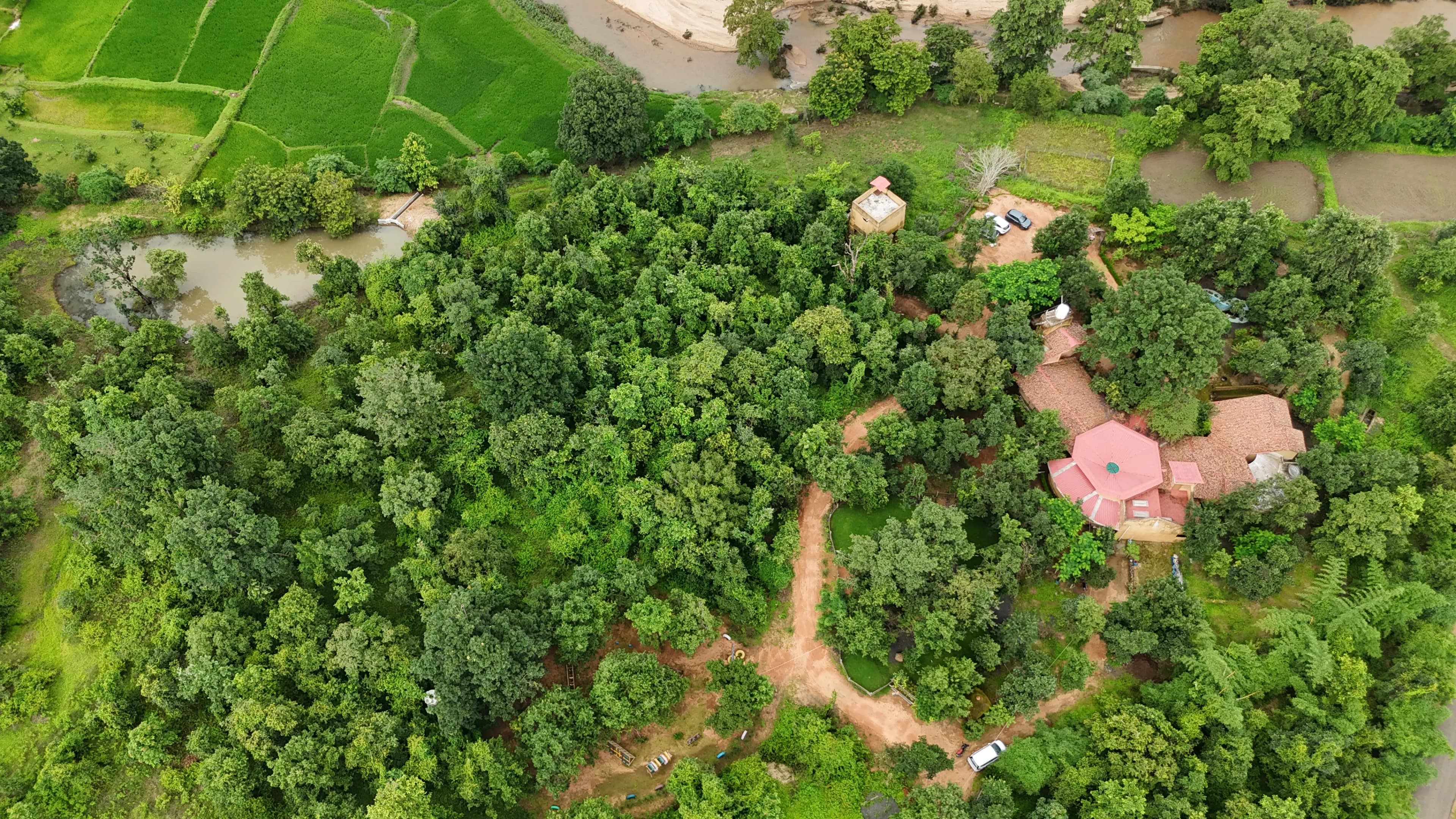
At Surwahi we try to play our small part in that bigger picture. Since 2015 our ten acres near Kanha have regenerated from fewer than 300 trees to more than 6,000, with 59 bird species recorded and leopard, sambar and wild boar visiting our rainwater pond. Read more about our tree census and biodiversity work, or plan a visit with our Kanha safari packages.
For a wider introduction to the park, see our Kanha National Park guide, and pack for the season with our Kanha safari packing list.